
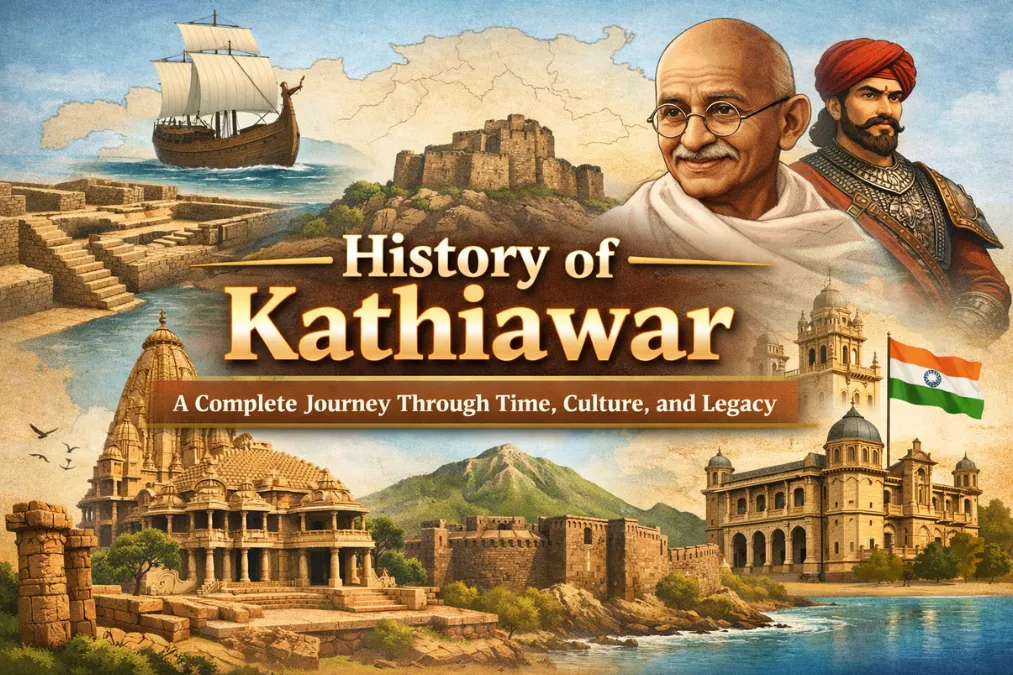
History of Kathiawar ગુજરાતના સૌથી મહત્વપૂર્ણ અને ઐતિહાસિક પ્રદેશોમાંથી એકની અનોખી ગાથા છે. પશ્ચિમ ભારતમાં આવેલો કાઠિયાવાડ, જેને સૌરાષ્ટ્ર તરીકે પણ ઓળખવામાં આવે છે, હજારો વર્ષોથી સંસ્કૃતિ, વેપાર, રાજકીય શક્તિ અને પરંપરાઓનું કેન્દ્ર રહ્યો છે.
આ પ્રદેશે પ્રાચીન સંસ્કૃતિઓથી લઈને શક્તિશાળી સામ્રાજ્યો, દરિયાઈ વેપાર અને સ્વતંત્રતા આંદોલન સુધી દરેક યુગમાં મહત્વપૂર્ણ ભૂમિકા ભજવી છે. આજે પણ કાઠિયાવાડ પોતાની સમૃદ્ધ પરંપરા અને આધુનિક વિકાસ વચ્ચે સંતુલન જાળવીને ગુજરાતના ગૌરવરૂપે ઉભો છે.
કાઠિયાવાડનું ભૂગોળ અને મહત્વ
કાઠિયાવાડ એક દ્વીપકલ્પ છે જે ત્રણ બાજુથી અરબી સમુદ્રથી ઘેરાયેલો છે અને ઉત્તર-પૂર્વમાં ગુજરાતના મુખ્ય ભૂભાગ સાથે જોડાયેલો છે. આ સ્થાનને કારણે તે પ્રાચીન સમયથી જ વેપાર અને સંસ્કૃતિ માટે ખૂબ જ મહત્વપૂર્ણ રહ્યો છે.
આ વિસ્તારમાં રાજકોટ, જામનગર, ભાવનગર, જુનાગઢ અને પોરબંદર જેવા શહેરો આવેલાં છે, જે દરેક પોતપોતાના ઐતિહાસિક અને સાંસ્કૃતિક મહત્વ માટે જાણીતા છે.
ઉપજાઉ જમીન, દરિયાકાંઠો અને પ્રાકૃતિક સંસાધનોને કારણે કાઠિયાવાડમાં વસવાટ અને વેપાર માટે લોકો આકર્ષાયા હતા. અહીંના બંદરો દ્વારા ભારતનો સંપર્ક આફ્રિકા, મધ્ય પૂર્વ અને એશિયાના અન્ય ભાગો સાથે થયો, જેનાથી આ પ્રદેશની ઓળખ વિકસતી ગઈ.
પ્રાચીન સમય: કાઠિયાવાડની શરૂઆત
સિંધુ ખીણ સંસ્કૃતિનો પ્રભાવ
History of Kathiawar નો આરંભ સિંધુ ખીણ સંસ્કૃતિથી થાય છે, જે વિશ્વની સૌથી જૂની નગર સંસ્કૃતિઓમાંની એક છે.
લોથલ અને ધોળાવીરા જેવા પુરાતત્વ સ્થળો દર્શાવે છે કે કાઠિયાવાડ તે સમયની અદ્યતન સંસ્કૃતિનો ભાગ હતો. લોથલ ખાસ કરીને એક પ્રાચીન બંદર તરીકે ઓળખાય છે, જે દર્શાવે છે કે દરિયાઈ વેપાર તે સમયથી જ વિકસિત હતો.
અહીં મળેલા ગોદામ, નાળીઓ અને વેપારના પુરાવા દર્શાવે છે કે તે સમયના લોકો ખૂબ જ સુવ્યવસ્થિત અને આગળ વધેલા હતા.
વૈદિક સમય અને વસાહતો
સિંધુ સંસ્કૃતિ પછી વૈદિક સમયનો પ્રારંભ થયો. નાના ગામો અને જાતિ આધારિત સમાજો વિકસવા લાગ્યા. કૃષિ અને પશુપાલન મુખ્ય જીવનધંધા બન્યા.
પ્રાચીન ગ્રંથોમાં “સૌરાષ્ટ્ર” નો ઉલ્લેખ મળે છે, જે દર્શાવે છે કે તે સમયથી જ આ પ્રદેશનું મહત્વ હતું.
સામ્રાજ્યોનો ઉદય અને શાસન
મૌર્ય સામ્રાજ્ય અને અશોકનો પ્રભાવ
ચોથી સદી ઈસાપૂર્વે કાઠિયાવાડ મૌર્ય સામ્રાજ્યનો ભાગ બન્યો. સમ્રાટ Ashoka એ અહીં બૌદ્ધ ધર્મનો પ્રસાર કર્યો.
ગીરનાર નજીક મળેલા શિલાલેખો તેમના શાસન અને નૈતિક સિદ્ધાંતોના પુરાવા આપે છે. આ સમયમાં શાંતિ અને સુશાસન સ્થાપિત થયું, જેનાથી પ્રદેશનો વિકાસ થયો.
પશ્ચિમ ક્ષત્રપ અને ગુપ્ત યુગ
મૌર્ય પછી પશ્ચિમ ક્ષત્રપોએ શાસન કર્યું અને વેપારને પ્રોત્સાહન આપ્યું. તેમના સિક્કા મજબૂત આર્થિક વ્યવસ્થાનો પુરાવો છે.
પછી Gupta Empire નો પ્રભાવ આવ્યો, જેને ભારતનો સુવર્ણ યુગ કહેવાય છે. આ સમયમાં કળા, સાહિત્ય અને વિજ્ઞાનનો વિકાસ થયો.
મધ્યયુગીન કાળ: રાજવંશો અને સંસ્કૃતિનું સંમિશ્રણ
રાજપૂત શાસન
મધ્યયુગમાં કાઠિયાવાડમાં રાજપૂત રાજવંશોનો ઉદય થયો. જુનાગઢના ચૂડાસમા અને જામનગરના જાડેજા રાજાઓએ પ્રદેશમાં મહત્વપૂર્ણ શાસન કર્યું.
તેમણે કિલ્લાઓ, મંદિરો અને શહેરોની રચના કરી, જે આજે પણ તેમની વારસાની સાક્ષી છે.
ઇસ્લામિક શાસનનો પ્રભાવ
14મી સદી પછી કાઠિયાવાડ પર દિલ્હી સલ્તનત અને ગુજરાત સલ્તનતનો પ્રભાવ આવ્યો. આ સમયમાં હિન્દુ અને ઇસ્લામિક સંસ્કૃતિનું સંમિશ્રણ થયું.
મસ્જિદો, મકબરાઓ અને નવી આર્કિટેક્ચરલ શૈલીઓ આ યુગની ઓળખ છે. વેપાર યથાવત્ વિકસતો રહ્યો.
ઔપનિવેશિક યુગ અને બ્રિટિશ શાસન
યુરોપિયન વેપારીઓનું આગમન
કાઠિયાવાડની દરિયાકાંઠાની સ્થિતિને કારણે પોર્ટુગીઝ, ડચ અને બ્રિટિશ વેપારીઓ અહીં આવ્યા.
બ્રિટિશ શાસન અને રજવાડાં
આખરે British East India Company એ નિયંત્રણ મેળવ્યું. કાઠિયાવાડ ઘણા નાના રજવાડાઓમાં વહેંચાયો, જે બ્રિટિશ દેખરેખ હેઠળ હતા.
રાજકોટ એક મહત્વપૂર્ણ પ્રશાસનિક કેન્દ્ર બન્યું. રેલવે, શિક્ષણ અને આધુનિક સુવિધાઓનો વિકાસ થયો, પણ સાથે સાથે વિરોધ પણ વધ્યો.
સ્વતંત્રતા આંદોલનમાં કાઠિયાવાડની ભૂમિકા
History of Kathiawar માં સ્વતંત્રતા સંઘર્ષનો મહત્વનો હિસ્સો છે.
Mahatma Gandhi નો જન્મ પોરબંદરમાં થયો હતો. તેમના અહિંસા અને સત્યના સિદ્ધાંતો ભારતને સ્વતંત્ર બનાવવામાં ખૂબ જ મહત્વપૂર્ણ રહ્યા.
કાઠિયાવાડના લોકો પણ આંદોલનમાં સક્રિય રીતે જોડાયા હતા.
સ્વતંત્રતા પછીનો વિકાસ
સૌરાષ્ટ્ર રાજ્યની રચના
1947 પછી કાઠિયાવાડના રજવાડાઓને એકત્રીત કરીને સૌરાષ્ટ્ર રાજ્ય બનાવવામાં આવ્યું.
ગુજરાતમાં વિલીન
1960માં આ પ્રદેશ Gujarat રાજ્યનો ભાગ બન્યો અને ત્યારથી સતત વિકાસ પામતો રહ્યો છે.
કાઠિયાવાડની સંસ્કૃતિ અને પરંપરા
ભાષા અને ઉત્સવો
અહીં ગુજરાતી ભાષા બોલાય છે, જેમાં કાઠિયાવાડી બોલી વિશેષ છે. ગરબા અને રાસ જેવા લોકનૃત્યો ખૂબ લોકપ્રિય છે.
નવરાત્રી, જન્માષ્ટમી અને દિવાળી જેવા તહેવારો ખૂબ ઉત્સાહથી ઉજવાય છે.
કલા અને ભોજન
બાંધણી, કઢાઈ અને હસ્તકલા કાઠિયાવાડની ઓળખ છે. અહીંનું ભોજન મસાલેદાર અને સ્વાદિષ્ટ હોય છે, જેમાં બાજરીનો રોટલો, સેવ ટામેટા અને લસણની ચટણી પ્રસિદ્ધ છે.
આર્થિક અને દરિયાઈ મહત્વ
ઇતિહાસમાં કાઠિયાવાડ દરિયાઈ વેપાર માટે મહત્વપૂર્ણ કેન્દ્ર રહ્યું છે. પોરબંદર, વેરાવળ અને ભાવનગર જેવા બંદરો દ્વારા આંતરરાષ્ટ્રીય વેપાર થતો હતો.
આજે પણ કૃષિ, માછીમારી અને ઉદ્યોગો દ્વારા પ્રદેશ ગુજરાતની અર્થવ્યવસ્થામાં યોગદાન આપે છે.
ઐતિહાસિક સ્થળો અને વારસો
કાઠિયાવાડમાં અનેક ઐતિહાસિક સ્થળો છે, જેમ કે Somnath Temple, ગીરનાર પર્વત અને જુનાગઢ કિલ્લો.
આ સ્થળો પર્યટકોને આકર્ષે છે અને પ્રદેશના ઇતિહાસને જીવંત રાખે છે.
આધુનિક કાઠિયાવાડ
આજે કાઠિયાવાડ પરંપરા અને આધુનિકતાનું સુંદર સંમિશ્રણ છે. શહેરોમાં વિકાસ થઈ રહ્યો છે, પરંતુ લોકો પોતાની સંસ્કૃતિ અને પરંપરાને જાળવી રાખે છે.
શિક્ષણ, ઉદ્યોગ અને પર્યટન ક્ષેત્રોમાં વૃદ્ધિ થઈ રહી છે, જે આ પ્રદેશને ગુજરાતનો મહત્વપૂર્ણ ભાગ બનાવે છે.
Also read: Kathiawar tourist places: ગુજરાતના છુપાયેલા પર્યટક ખજાનાઓની સંપૂર્ણ પ્રવાસ માર્ગદર્શિકા
નિષ્કર્ષ
History of Kathiawar એક અનોખી સફર છે, જેમાં પ્રાચીન સંસ્કૃતિઓથી લઈને આધુનિક વિકાસ સુધીના તમામ તબક્કાઓનો સમાવેશ થાય છે.
લોથલના બંદરથી લઈને મહાત્મા ગાંધીના વિચારો સુધી, કાઠિયાવાડે ભારતના ઇતિહાસમાં મહત્વપૂર્ણ યોગદાન આપ્યું છે.
આ પ્રદેશ આજે પણ પોતાની સમૃદ્ધ વારસાને જાળવી રાખીને પ્રગતિના માર્ગે આગળ વધી રહ્યો છે.